
Chateau Duhart-Milon2010
RED WINE
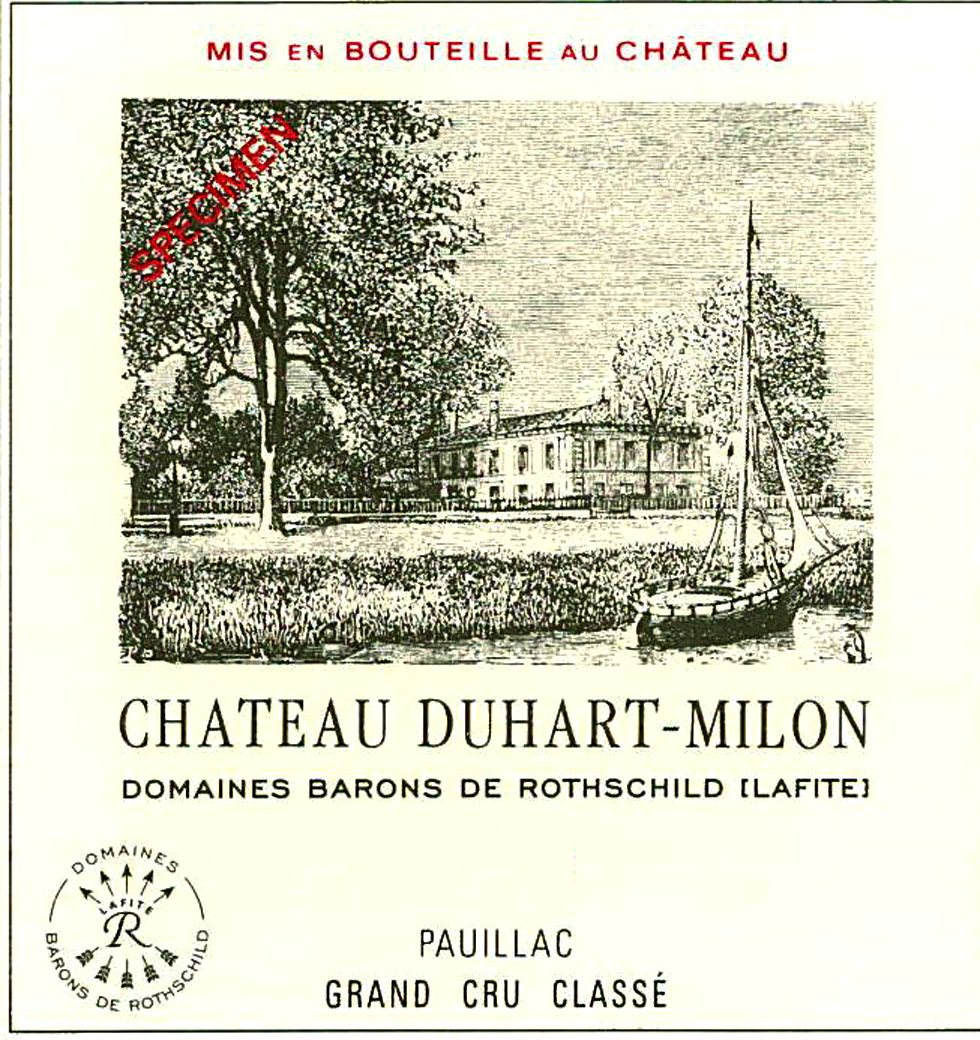
- Producer Chateau Duhart-Milon
- Blend 100% Red Bordeaux Blend
- Country France
- Region Bordeaux
- Appellation Pauillac
- UPC 0 15643 49849 7
Reviews
James Suckling
A wine with an intense sous bois, fresh tobacco and dried flower character on the nose and palate. Full body, with ultra-fine tannins and an attractive finish. It's structured yet polished with a beauty and stature.
by JS, James Suckling , 2013
Wine Advocate 94
Deep garnet in color, the 2010 Duhart-Milon rocks up with upfront notions of baked plums, warm cassis and mulberries plus suggestions of cigar box, sandalwood, dried roses and forest floor. Full-bodied, rich and decadent in the mouth, the palate has a beautiful texture of velvety, fantastically ripe tannins and lovely freshness, finishing very long and very classy.
by LPB, Wine Advocate , 2020
Wine Enthusiast 93
Juicy black currant fruit mingles with bright acidity and dark-chocolate tannins. This often overlooked chateau, with the same production team as Lafite-Rothschild, has an intense and concentrated 2010, balanced superbly between firmness and fruitiness.
by RV, Wine Enthusiast , 2013
Wine Spectator 91
Well-polished, with sleek edges to the fleshy plum, cassis and blackberry fruit, while the finish is embedded with black licorice and violet notes. Approachable now, but the stuffing is there to cellar this for a bit. Drink now through 2025
by JM, Wine Spectator , 2013
Technical Details
Tasting notes
A delicate wine, the initially supple tannins gradually become more powerful. Well-structured on the palate with good density. Precise, fairly full-bodied finish.Cabernet Sauvignon 73.00
Merlot 27.00
Vintage
The vineyard cycle began with a cold, relatively wet winter, resulting in a slightly later bud-break than in 2009, in mid-April. Growth was then boosted by dry, sunny weather in April. May and June were characterized by alternating periods of rain and sunshine. June began with a cold spell that complicated the flowering of the Merlot, resulting in flower abortion and uneven grape size.Fortunately, July was very dry (less than 20 mm of rain) with relatively high temperatures, which helped the vines to catch up from the delays caused during flowering. August and September were very dry, with beautiful daytime temperatures and cool nights creating ideal conditions for the grapes to slowly reach optimum ripeness.